

Kandy
last ancient kingdom
of Sri Lanka
Historical Importance
As a Cultural Heritage
Kandy is one of Sri Lanka’s most treasured destinations, combining royal history, Buddhist heritage, and breathtaking natural beauty. Known as the last royal capital of Sri Lanka. Surrounded by misty mountains and lush landscapes, this UNESCO World Heritage city preserves the traditions, architecture, and cultural identity of ancient Sri Lanka. Kandy offers a unique experience where visitors can explore Sri Lanka’s royal history, Buddhist spirituality, traditional culture, and natural beauty in one destination. From the sacred Temple of the Tooth Relic to misty mountains, ancient forests, and vibrant festivals, Kandy provides a deep connection to the history and soul of Sri Lanka.
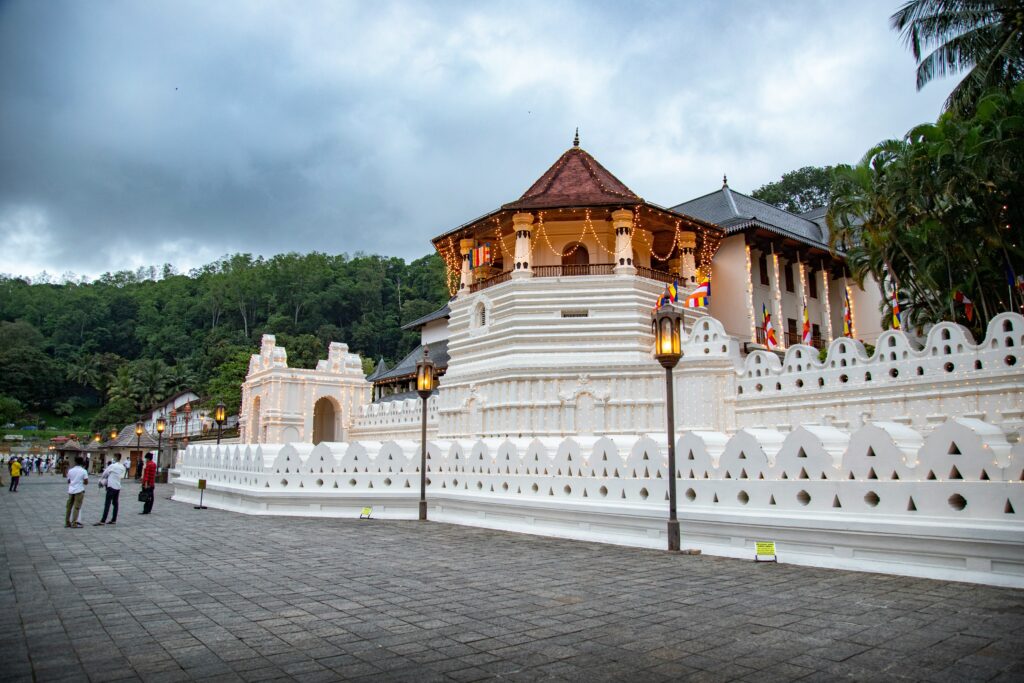
The city’s greatest attraction is the Sri Dalada Maligawa (Temple of the Sacred Tooth Relic), one of the most sacred Buddhist sites in the world. The temple houses the Sacred Tooth Relic of Lord Buddha, which according to tradition was brought to Sri Lanka from India in the 4th century CE during the reign of King Kithsiri Mewan.Located within the former royal palace complex, the temple showcases magnificent Kandyan architecture, traditional paintings, and religious ceremonies that attract thousands of pilgrims and visitors every year. The sacred city also hosts the famous Kandy Esala Perahera, a grand cultural procession featuring traditional dancers, drummers, and decorated elephants in honor of the Sacred Tooth Relic.
A Cultural Legacy
Sacred Tooth Relic Chamber
The most important area of the temple where the relic is preserved inside a series of golden caskets.
Royal Palace
The temple is located within the former Royal Palace complex of the Kandyan Kingdom.
Esala Perahera Festival
The Kandy Esala Perahera is one of the oldest and most spectacular cultural festivals in Sri Lanka. It is held annually in July or August to honor the Sacred Tooth Relic of Lord Buddha.
Kandyan Architecture
Features traditional wooden carvings, decorative paintings, and artistic designs unique to the Kandyan era.